The Invitation Needs a Next Step
A clear invitation gives people the purpose, time and first action they need to decide whether to join and arrive knowing what to do.
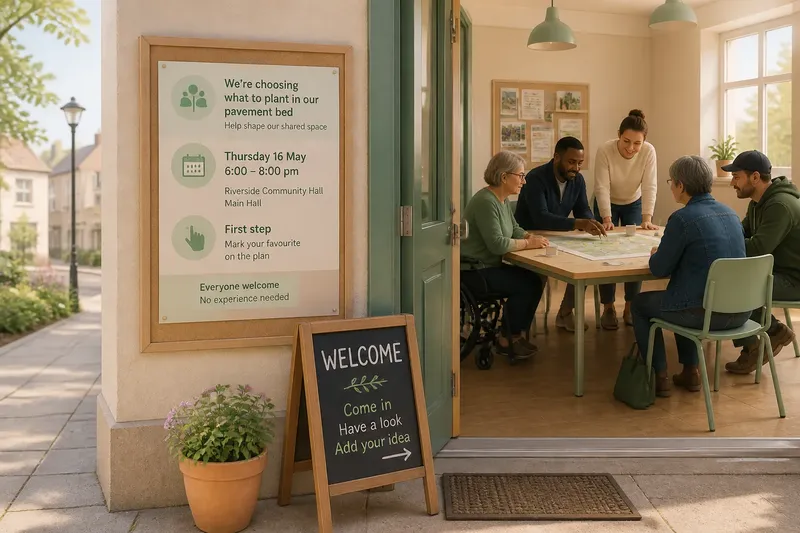
The common mistake in a community invitation is asking people to “come along” without saying what will happen when they get there. An invitation with no clear next step makes a willing reader do the organiser’s work: guess the purpose, check the practicalities and work out how to take part. Some will decide it is easier not to ask.
A useful invitation answers three questions plainly: why is this gathering happening, when and where is it, and what is the first thing a newcomer can do? The answer need not be grand. “Help sort the donated books; we’ll start by grouping them by subject” is more usable than “Join us for a community afternoon”.
What should the invitation let someone decide?
An invitation is not a miniature report about the project. Its job is to help a reader decide whether the occasion suits them and, if so, how to join. That means naming the purpose in terms of the work or shared activity, rather than relying on broad phrases such as “building community”.
Say what people will actually do, and distinguish that from what may happen later. If the group is gathering to choose a date for a street clean-up, say that the immediate task is agreeing a date. Do not imply that people must already be ready to pick up litter, bring equipment or join an ongoing committee.
Then give the time and place in a form that survives being forwarded. Include the day, start and finish time, venue name and a recognisable location detail, such as the side entrance to the library. If people need to know whether to arrive promptly or can drop in, say so.
Finally, name the first action. It might be to listen to a short explanation, add an idea to a map, choose a task card or simply speak to the person at the door. A small, visible action gives someone a way into the gathering without requiring them to invent a role on arrival.
How can you shape the invitation over a week?
A short preparation routine helps keep the invitation specific without turning it into a campaign plan. Work backwards from the gathering date, and leave enough time for someone to ask a question or pass the message to a neighbour.
- About a week before: Agree the purpose, time, place and first action with the people hosting. Check that the stated activity matches what the group can actually offer; “decide which planter to repair” is a poor promise if the decision has already been made.
- Several days before: Write the invitation in plain language. Put the practical details near the top, and add a named contact method, such as an email address or a phone number that someone will check.
- A few days before: Ask someone unfamiliar with the plan to read it. Ask what they think will happen, when they should arrive and what they could do first. Clarify any answer that depends on guesswork.
- The day before: Send a brief reminder through the same channels used for the invitation. Repeat the location and first action, and mention any change that affects someone’s decision to attend.
- On the day: Put a sign at the entrance and have a host ready to welcome arrivals, explain the first activity and point out where to begin. The invitation should describe the welcome; the room should then deliver it.
This sequence is modest by design. It does not require a polished poster, a mailing platform or an elaborate registration system. A noticeboard, a community WhatsApp group or a small stack of printed cards can all work if the information remains intact when shared.
Which details make the next step clear?
Purpose, time and first action are the core. A few additional details can remove avoidable uncertainty, especially for someone who has never attended before.
- Who is welcome: State whether the gathering is open to anyone, intended for a particular neighbourhood, or limited to people involved in a specific task. Avoid making readers infer eligibility from a group name.
- What to bring: Mention only items that are genuinely useful, and say if nothing is needed. “Bring a mug if you have one” is different from leaving readers to wonder whether they need tools, materials or preparation.
- How long it lasts: Give a finish time or explain that people may leave when they need to. “From 6 pm” gives a start but not enough for someone arranging care or transport.
- How to respond: Say whether a reply is needed, and how to give it. If people can simply turn up, make that clear; if the group needs numbers for a room or shared materials, give a sensible reply date.
- What happens if plans change: Offer one reliable place for updates, such as the organiser’s phone number or the notice at the venue. Keep the route simple enough that a reader can use it without joining several online groups.
Include access information that is relevant to the venue and activity, such as step-free entry or a nearby bus stop. Do not make sweeping claims about access unless someone responsible for the space can confirm them. If a reader needs a particular adjustment, provide a way to ask privately.
What should an invitation say about joining?
Many people hesitate because “join in” sounds like an undefined commitment. Make the scale of participation visible. Someone may be able to attend for a short while, observe before taking a task, or contribute an idea without signing up for future work.
Say what is optional and what is needed for the gathering to function. If the event is a discussion, a person can usually listen before speaking. If the group is sorting materials, explain whether there are quiet or seated tasks, if those are available. This is not a promise that every preference can be accommodated; it is useful information about the choices on offer.
Imagine a neighbourhood group inviting people to help choose what to plant in a shared pavement bed. The organiser writes that the gathering is at the community hall on Thursday evening, explains that the group will compare a few proposed planting ideas, and says the first action is to mark a favourite on a printed plan. A resident who cannot stay for the whole discussion can still decide to attend, make a choice and tell the host when they need to leave. The wording makes the contribution legible before the door opens.
That clarity also protects the group from accidentally implying a larger obligation. Do not describe a one-off invitation as a chance to “get involved” if the immediate purpose is only to gather opinions. If there is a later route into the work, mention it as an option rather than a condition of attending.
What questions will a reader still have?
Do people need to reply before they come?
Say so directly. If no reply is needed, invite people to turn up; if numbers matter, state how to respond and by when.
Should the invitation include a full agenda?
Usually not. Give the purpose and the first activity, then mention any important decision or change of task that people should expect.
How can a newcomer know whom to approach?
Name a host or describe a simple sign-in point, such as the table beside the entrance. Avoid relying on newcomers to identify the organiser from a group of familiar faces.
What if the time or venue changes?
Contact people through the route given in the invitation and update the place where the original notice appeared. State the new detail plainly rather than sending an unexplained correction.
How do you keep the invitation honest?
Read every promise against the plan for the gathering. If the wording says people will help decide, leave room for their input; if a choice is already settled, describe the event as a chance to hear the plan or discuss how to carry it out. An invitation that overstates influence may attract people once and discourage them the next time.
Check the practical details with the person who knows them: the venue contact for access and entry, the organiser for the finish time, and the activity lead for materials or tasks. Where a venue’s rules or a provider’s instructions determine what can be offered, confirm those details once rather than improvising in the invitation.
Keep the final wording short enough to read on a phone, but not so compressed that the reader has to ask what “drop in for the project” means. A useful invitation gives the purpose, time and first action in the first few lines, then adds only the details that help someone decide.
For an invitation that works, make the next step visible both before and after arrival: tell the reader what to do first, and make sure a host, sign or simple activity is ready to meet them there. The message then becomes more than an announcement; it offers a clear, manageable way to take part.